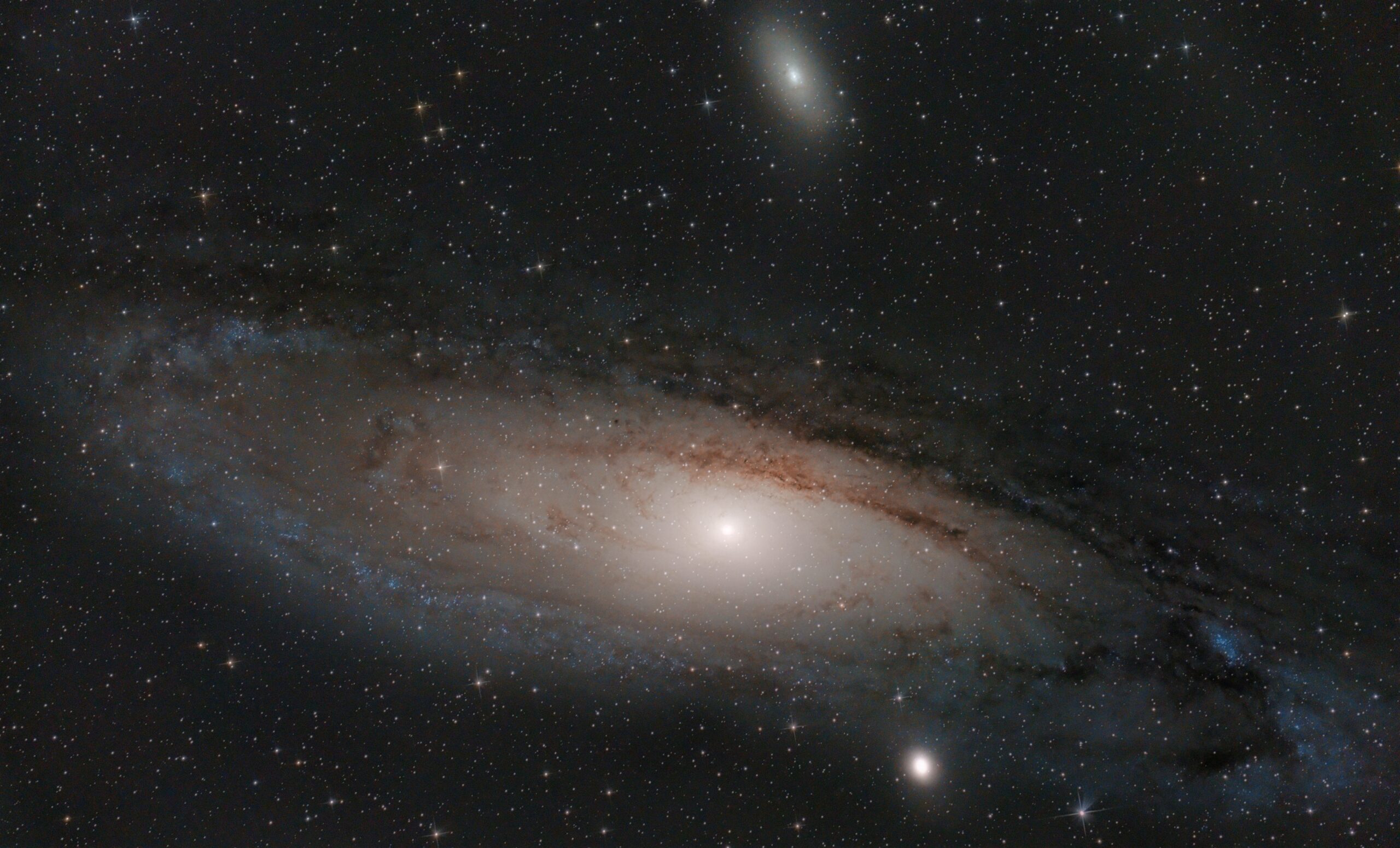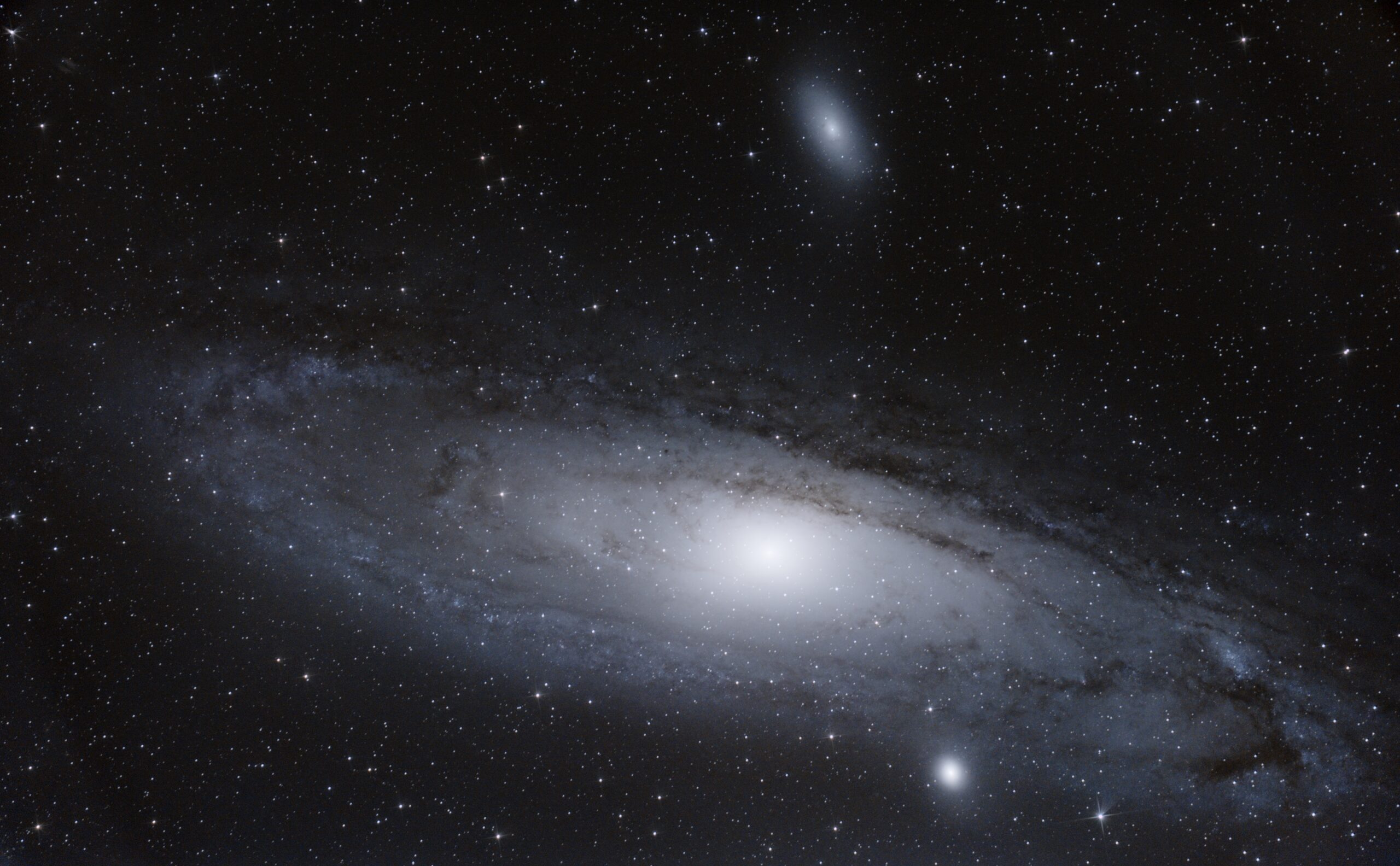
The Andromeda Galaxy (M31)
The Beginning of an Astrophotography Journey (August 2025)
This image is the result of a collaboration with Richard Batorfi. The data was captured using his telescope and mount, together with my unmodified Nikon Z5 camera.
The Andromeda Galaxy was our first serious astrophotography target. Before attempting the capture, we spent countless hours watching tutorials, reading articles, and learning the fundamentals of astrophotography. At the time, we had neither guiding nor a GoTo system, which meant that a significant portion of the captured frames had to be discarded due to tracking inaccuracies.
Despite these limitations, the experience was unforgettable. Watching the spiral arms and dust lanes of the Andromeda Galaxy gradually emerge during processing was truly breathtaking. It was hard to believe that, with relatively simple equipment, we were able to capture details of a galaxy located more than 2.5 million light-years away.
The two images presented here were created from the same dataset. The first is the original processing completed shortly after the data was captured. The second is a reprocessed version created approximately six months later, after gaining significantly more experience in image processing and astrophotography.
The purpose of the reprocessing was not to alter the data itself, but to reveal more detail, achieve more natural color reproduction, and create a more balanced final image. Improved calibration and color processing made it possible to better highlight the subtle color variations within the galaxy, including the warm tones of the core, the bluish star-forming regions within the spiral arms, and the intricate dust lanes that define its structure.
For me, these two images represent more than just the Andromeda Galaxy. Together, they illustrate how much can be learned through practice, experimentation, and experience. This galaxy will always hold a special place in my astrophotography journey—not only because it was one of my first deep-sky images, but because it showed me how much potential can remain hidden within the same data.